Industry
Manufacturing
Challenge
Ford Meter Box struggled to manage complex planning and scheduling for over 30,000 finished goods, relying on time-consuming manual updates that limited efficiency and agility.
Results
By implementing the AI assistant “Edwin” with ERP Suites, the company streamlined updates to routings and work centers, empowering the team to make faster updates.
Services
Artificial Intelligence

Background
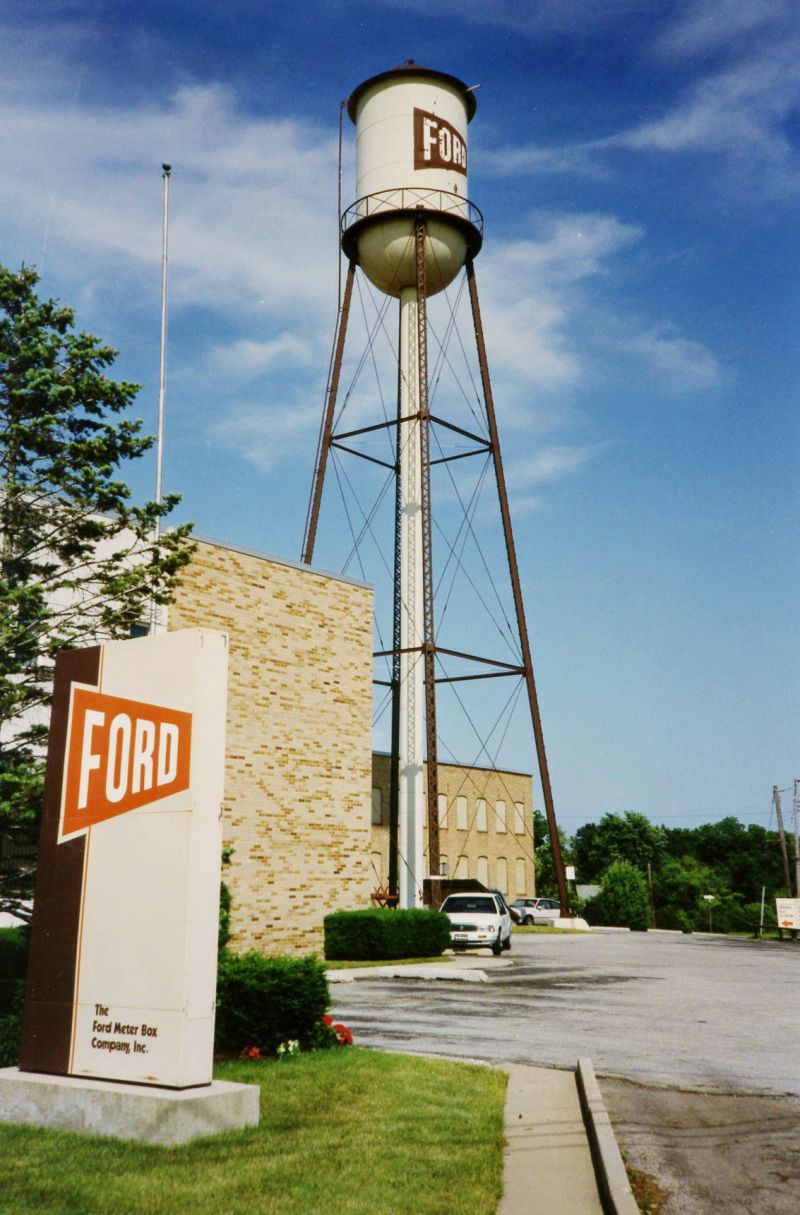
For more than 125 years, Ford Meter Box Company has built a reputation for quality and innovation in the brass waterworks industry. Based in Wabash, Indiana, the company designs and manufactures products that support critical water infrastructure across North America.
Managing more than 30,000 finished goods—each with unique routings and lead times—had become increasingly complex inside JD Edwards EnterpriseOne. Manual updates, spreadsheets, and disconnected steps slowed planners and introduced inconsistency.
Partnering with ERP Suites, Ford Meter Box introduced the AI assistant “Edwin” to simplify and automate high-impact production-planning tasks.
Business Challenge
Managing thousands of SKUs and work orders across multiple facilities presented a daily balancing act for Ford Meter Box planners. Production priorities changed frequently due to material availability, machine downtime, or customer demand shifts. Yet, every adjustment required a series of manual steps inside JD Edwards — updating routings, modifying work centers, and ensuring that production data stayed synchronized with reality.
The main issues included:
-
Manual workload balancing: Planners had to move jobs between machines and work centers by hand, a tedious and repetitive process.
-
Data tracked outside of JDE: Because JDE didn’t reflect day-to-day shop-floor changes, much of the planning information lived in Excel files and email threads.
-
Tedious, error-prone processes: A simple routing change could require dozens of clicks and validations across several JDE applications.
-
Inconsistent system data: Production often advanced faster than data entry, leaving planners and accountants working with outdated or incomplete information.
-
Limited time for strategic planning: With so much energy spent keeping data up to date, there was little room for analyzing trends or optimizing capacity.
The company’s goal was clear: reduce manual effort, improve accuracy, and free planners to focus on higher-value decisions. To get there, Ford Meter Box needed automation that fit seamlessly within its trusted JD Edwards environment.
Solution: “Edwin” — The AI Digital Assistant
In collaboration with ERP Suites, Ford Meter Box developed Edwin, a conversational AI assistant built on Oracle technology and tightly integrated with JD Edwards EnterpriseOne. Edwin introduced an intuitive interface that enables planners to interact with a digital assistant using natural language, making routine planning tasks faster and more streamlined.
Phase 1 focused on two high-impact capabilities:
-
Automating the creation of alternate routings
Edwin streamlines how planners build and manage alternate routings, reducing the process from 18+ manual steps to around 6. Users can now create alternates quickly, enabling faster response when machines go down or production priorities shift. -
Automating work-center updates on existing work orders
Previously, updating a work order’s work center involved multiple screens and validations. Edwin now completes the process in four steps instead of ten, allowing planners to reassign workloads in real time — without leaving the JDE environment.
Additional efficiencies:
-
Reduced JDE navigation from 21 clicks to a few guided steps.
-
Faster access to routing information — 3 steps instead of 6.
-
Seamless integration with existing JDE security and master-data controls, preserving compliance while introducing automation.
Edwin’s “human-in-the-loop” design ensured that planners maintained full oversight. The assistant doesn’t replace decision-making — it simply removes the friction that once surrounded it.
Results
The results were immediate and tangible.
Routine tasks that once consumed hours per week now take minutes, freeing planners and schedulers to focus on production strategy instead of repetitive data entry.
Key outcomes:
-
Improved data consistency for routings and work centers in JD Edwards.
-
Reduced manual effort and fewer opportunities for human error.
-
Accelerated turnaround for production changes, allowing faster response to machine downtime or capacity constraints.
-
More strategic use of planner time, focusing on forecasting and optimization rather than transactions.
The project’s success earned industry attention — Ford Meter Box and Edwin were featured during the JD Edwards Blueprint 2024 Keynote, demonstrating how even long-established manufacturers can embrace AI in a practical, human-centered way.
Conclusion
Ford Meter Box’s partnership with ERP Suites shows how legacy systems like JD Edwards can evolve for the future without disruption. By focusing first on high-impact, low-risk automation, the company demonstrated measurable efficiency gains and paved the way for more advanced AI capabilities.
Edwin now stands as a digital teammate — speeding up routine tasks, improving consistency, and helping planners make smarter decisions faster. For Ford Meter Box, this marks not just a modernization of planning and scheduling, but a strategic step toward intelligent manufacturing.